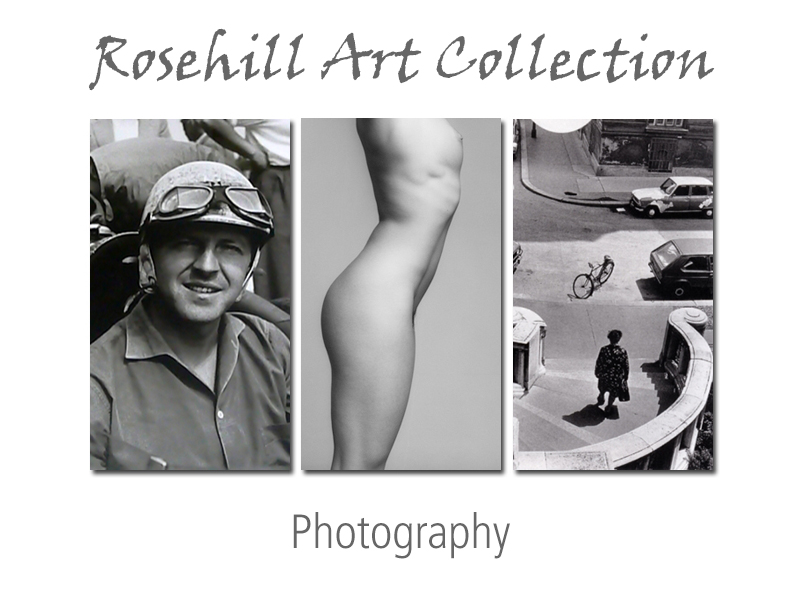
Mapplethorpe, Robert
Robert Mapplethorpe (November 4, 1946 - March 9, 1989) was an American photographer, known for his sensitive yet blunt treatment of controversial subject-matter in the large-scale, highly stylized black and white medium of photography. His work featured an array of subjects, including celebrity portraits, male and female nudes, self-portraits and still-life images of flowers. His most controversial work is that of the underground BDSM scene in the late 1960s and early 1970s of New York City. The homoeroticism of this work fuelled a national debate over the public funding of controversial artwork. Biography Mapplethorpe was born in Floral Park, Queens, New York City, the son of Joan Dorothy (Maxey) and Harry Irving Mapplethorpe, an electrical engineer. He was of English, Irish, and German descent, and grew up as a Roman Catholic in Our Lady of the Snows Parish. He had five brothers and sisters. He studied for a Bachelor of Fine Arts from the Pratt Institute in Brooklyn, where he majored in Graphic Arts, though he dropped out in 1969 before finishing his degree. Mapplethorpe lived with his close friend Patti Smith from 1967 to 1972, and she supported him by working in bookstores. They created art together; and, even after he realized he was homosexual, they maintained a close relationship. From 1977 until 1980, Mapplethorpe was the lover of writer and Drummer magazine editor Jack Fritscher. Mapplethorpe's studio at 24 Bond Street in Manhattan, later kept by him for use as darkroom Mapplethorpe took his first photographs in the late 1960s or early 1970s using a Polaroid camera. In the mid-1970s, he acquired a Hasselblad medium-format camera and began taking photographs of a wide circle of friends and acquaintances, including artists, composers, and socialites. During this time, he became friends with New Orleans artist George Dureau, whose work had a profound impact on Mapplethorpe, so much so that he restaged many of Dureau's early photographs. By the 1980s his subject matter focused on statuesque male and female nudes, delicate flower still lifes, and highly formal portraits of artists and celebrities. Mapplethorpe's first studio was at 24 Bond Street in Manhattan. In the 1980s, his mentor and lifetime companion art curator Sam Wagstaff bought a top-floor loft at 35 West 23rd Street for Robert, where he lived and used as his shooting space. He kept the Bond Street loft as his darkroom. In 1988, Mapplethorpe selected Patricia Morrisroe to write his biography, which was based on more than 300 interviews with celebrities, critics, lovers, and Mapplethorpe himself. Death Mapplethorpe died on the morning of March 9, 1989 at the age of 42 due to complications from HIV/AIDS, in a Boston, Massachusetts hospital. His corpse was cremated. His ashes are interred at St. John's Cemetery, Queens in New York, at his mother's grave-site, etched "Maxey". Nearly a year before his death, the ailing Mapplethorpe helped found the Robert Mapplethorpe Foundation, Inc. His vision for the Foundation was that it would be "the appropriate vehicle to protect his work, to advance his creative vision, and to promote the causes he cared about". Since his death, the Foundation has not only functioned as his official estate and helped promote his work throughout the world, but it has also raised and donated millions of dollars to fund medical research in the fight against AIDS and HIV infection. The Foundation also determines which galleries represent Mapplethorpe's art. The Robert Mapplethorpe Foundation donated the Robert Mapplethorpe Archive to the Getty Research Institute. The archive spans from 1970 to 1989. Art Mapplethorpe worked primarily in a studio, and almost exclusively in black and white, with the exception of some of his later work and his final exhibit "New Colors". His body of work features a wide range of subjects, but his main focus and the greater part of his work is erotic imagery. He would refer to some of his own work as pornographic, with the aim of arousing the viewer, but which could also be regarded as high art. His erotic art explored a wide range of sexual subjects, depicting the BDSM subculture of New York in the 1970s, portrayals of black male nudes, and classical nudes of female bodybuilders. Mapplethorpe was a participant observer for much of his erotic photography, participating in the sexual acts which he was photographing and engaging his models sexually. Other subjects included flowers, especially orchids and calla lilies, children, statues, and celebrities, including Andy Warhol, Louise Bourgeois, Deborah Harry, Richard Gere, Peter Gabriel, Grace Jones, Amanda Lear, Laurie Anderson, Joan Armatrading and Patti Smith. Smith was a longtime roommate of Mapplethorpe and a frequent subject in his photography, including a stark, iconic photograph that appears on the cover of Smith's first album, Horses. His work often made reference to religious or classical imagery, such as a portrait of Patti Smith from 1986 which recalls Albrecht Dürer's 1500 self-portrait.
(Source: https://en.wikipedia.org/wiki/Robert_Mapplethorpe) |